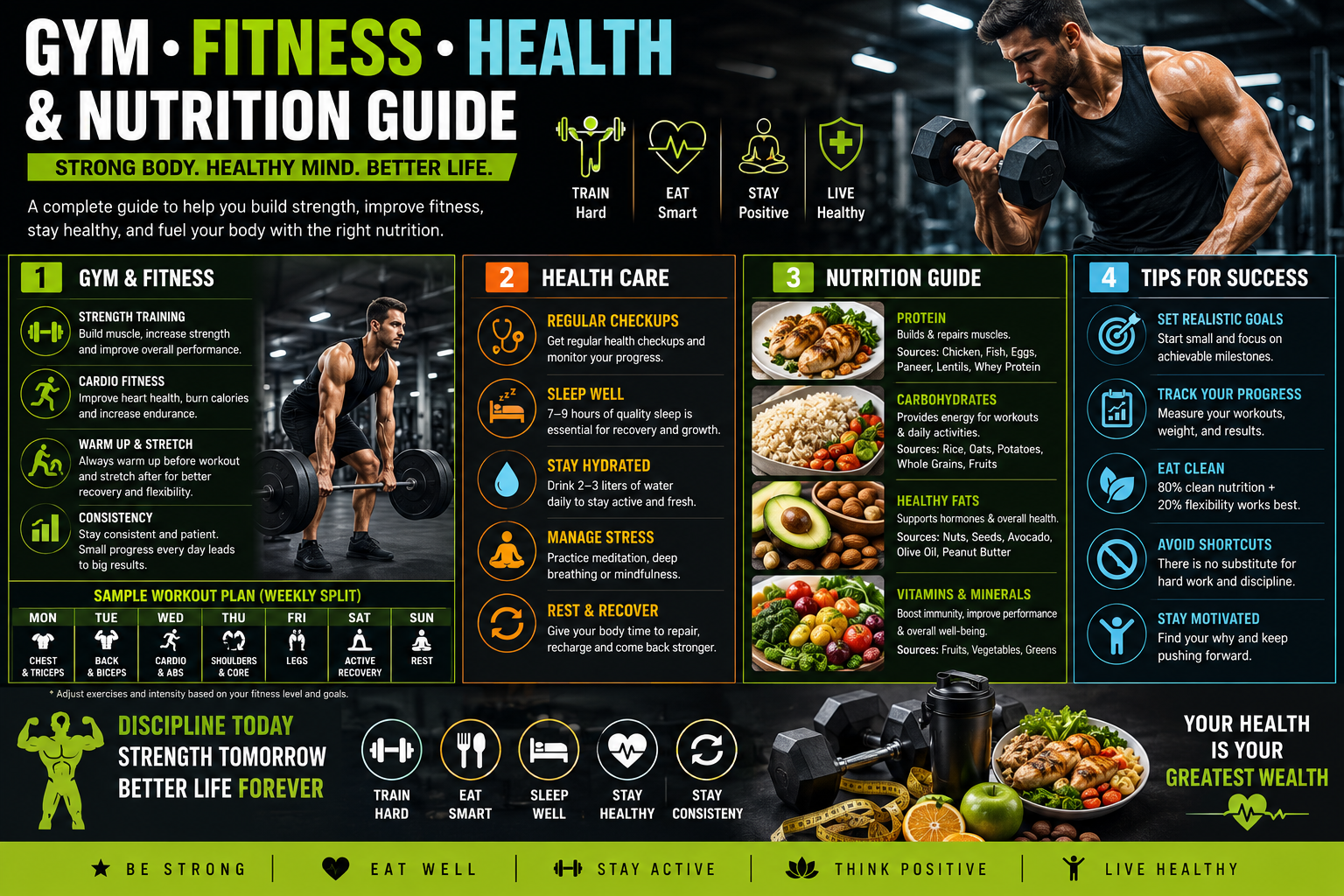
Build strength. Improve fitness. Create healthier habits.
Fitness is not just about lifting weights or changing your appearance. It is about developing a stronger body, improving your physical performance, and creating healthy habits that can become part of your everyday lifestyle.
Whether you are a beginner entering the gym for the first time or someone looking to improve an existing workout routine, understanding the fundamentals of exercise, nutrition, recovery, and consistency can help you work toward your fitness goals more effectively.
What Is Fitness?
Fitness is the ability to perform daily activities and physical tasks efficiently while maintaining good physical condition.
A well-rounded fitness program can include:
- Strength training
- Cardiovascular exercise
- Mobility and flexibility
- Balanced nutrition
- Rest and recovery
- Healthy lifestyle habits
The right combination depends on your individual goals, experience, schedule, and current fitness level.
Benefits of Regular Exercise
Regular physical activity can contribute to overall health and physical performance. Strength and cardio training can help support:
- Muscle strength and endurance
- Cardiovascular fitness
- Mobility and flexibility
- Healthy body composition
- Physical performance
- Energy levels
- Confidence and discipline
The most important factor is consistency. A realistic workout routine that you can follow regularly is more valuable than an extreme program that is difficult to maintain.
Strength Training for Beginners
Strength training is an important part of many fitness programs. It involves exercises that challenge your muscles against resistance.
Common strength-training exercises include:
- Squats
- Bench presses
- Rows
- Pull-ups
- Shoulder presses
- Lunges
- Deadlifts
- Core exercises
Beginner Gym Routine
A beginner can start with a simple full-body routine performed several times per week.
Workout Example:
- Squats – 3 sets
- Push-ups or Bench Press – 3 sets
- Lat Pulldowns – 3 sets
- Dumbbell Shoulder Press – 2–3 sets
- Lunges – 2–3 sets
- Plank – 2–3 sets
Start with a manageable resistance and focus on controlled movement and proper technique. Increase training difficulty gradually as your fitness improves.
Cardio and Cardiovascular Fitness
Cardiovascular exercise helps train your heart and lungs while improving endurance.
Popular cardio activities include:
- Walking
- Jogging
- Cycling
- Swimming
- Rowing
- Stair climbing
- Sports activities
You do not necessarily need complicated equipment. Brisk walking can be an effective way for many beginners to introduce more physical activity into their routine.
Nutrition and Fitness
Exercise and nutrition work together. Your food choices provide the energy and nutrients your body needs for daily activities and exercise.
A balanced diet can include:
Protein-Rich Foods
Examples include eggs, chicken, fish, lean meat, dairy products, beans, lentils, and other protein-rich foods.
Carbohydrate Sources
Rice, oats, potatoes, whole grains, fruits, and other carbohydrate-containing foods can provide energy for physical activity.
Healthy Fats
Nuts, seeds, olive oil, avocado, and certain types of fish provide dietary fats that can be part of a balanced eating pattern.
Fruits and Vegetables
A variety of fruits and vegetables can help provide fiber, vitamins, minerals, and other nutrients.
Rather than relying on extreme diets, focus on balanced eating habits that fit your lifestyle and goals.
Hydration and Exercise
Staying hydrated is an important part of an active lifestyle. Water needs vary between individuals and can be affected by factors such as exercise intensity, temperature, and sweating.
Make a habit of drinking fluids regularly throughout the day, especially when exercising or training in hot conditions.
Recovery: An Important Part of Training
Your workout does not end when you leave the gym. Recovery is an essential part of a sustainable fitness routine.
Important recovery habits include:
- Getting adequate sleep
- Taking rest days
- Eating nutritious foods
- Staying hydrated
- Managing training intensity
- Including mobility work when appropriate
Allowing your body enough time to recover can help you maintain consistent training and reduce unnecessary fatigue.
How to Stay Consistent With Your Fitness Goals
One of the biggest challenges in fitness is maintaining consistency.
Try these practical strategies:
Set Specific Goals
Instead of simply saying “I want to get fit,” create a specific goal such as improving your strength, increasing your weekly activity, or following a workout schedule consistently.
Track Your Progress
Keep a record of your exercises, sets, repetitions, weights, or other measurements relevant to your goal.
Create a Routine
Choose workout times that fit your schedule. Making exercise part of your routine can make it easier to stay consistent.
Focus on Gradual Progress
You do not need to make dramatic changes every week. Small improvements over time can add up to meaningful progress.
Common Gym Mistakes to Avoid
Lifting Too Much Weight
Using excessive weight can make it difficult to maintain proper technique. Choose resistance that allows you to perform the exercise with controlled form.
Skipping Warm-Ups
A suitable warm-up can prepare your body for physical activity. Start with light movement and gradually increase intensity.
Ignoring Recovery
Training without adequate recovery can make it harder to maintain performance and consistency.
Changing Programs Too Often
Give your workout routine enough time to work before constantly switching to a new program.
Comparing Your Progress With Others
Everyone has a different starting point, schedule, experience level, and body composition. Focus on your own progress.
Build a Sustainable Fitness Lifestyle
Successful fitness is not about following the most extreme workout or diet. It is about creating habits that you can maintain.
A sustainable approach includes:
Train consistently – Follow a realistic exercise routine.
Eat a balanced diet – Choose a variety of nutritious foods.
Recover properly – Give your body sufficient rest.
Stay active – Look for opportunities to move throughout the day.
Track your progress – Use measurable goals to monitor improvement.
Frequently Asked Questions
How many days a week should I go to the gym?
The ideal frequency depends on your goals, experience, schedule, and recovery. Beginners can start with a manageable routine and gradually increase their training as they become more comfortable.
Can beginners start strength training?
Yes. Beginners can perform strength-training exercises when they learn appropriate techniques and use suitable resistance. If you are new to exercise or have specific health concerns, consider getting guidance from a qualified fitness professional or healthcare professional.
Is cardio necessary for fitness?
Cardio is a useful component of overall fitness, particularly for developing cardiovascular endurance. The amount and type of cardio should depend on your goals and current fitness level.
How long does it take to see fitness results?
Results vary from person to person. Factors such as training consistency, nutrition, sleep, starting fitness level, and individual differences can affect progress. Focus on sustainable habits rather than expecting immediate changes.
Start Your Fitness Journey Today
You do not need to wait for the perfect time to begin.
Start with realistic goals, choose exercises that match your current fitness level, build healthy eating habits, and make recovery part of your routine.
Consistency creates progress. Progress creates confidence.
Take the Next Step
Ready to improve your fitness?
Start your workout journey today and build a healthier, stronger lifestyle—one workout at a time.
Disclaimer: This content is provided for general educational and informational purposes only. It is not a substitute for individualized medical, nutritional, or professional fitness advice. If you have a medical condition, injury, or concerns about starting an exercise program, consult an appropriately qualified professional.